
Cutlery tray for clear overview
A classic cutlery tray gathers daily utensils and creates a natural flow when setting the table. Choose a cutlery tray that utilizes the width of the drawer, so the compartments are stable and do not slide around. Place forks, knives, and spoons in their respective sections, and use the smaller compartments for teaspoons and straws. If you have space at the back of the drawer, you can divide it lengthwise so that serving utensils are kept separate. Stick to one style in the drawer - uniform dividers make it easier to put things away after washing up and maintain a calm appearance.
Measure before you buy
Measure the internal width, depth, and height of the drawer. Note the measurements and choose a tray that fills out well without pressing against the sides. Combine with narrow modules if there is space on the sides.
Drawer organizer for small utensils
Small utensils like corkscrews, measuring spoons, peelers, and clips deserve their own pocket. A drawer organizer makes it easy to group by function, so you find the right tool without rummaging. Place the most used utensils at the front and center, and put less frequently used ones at the back. Think in terms of fixed routines - if you always grab elastic bands and clips by the baking corner, then they should reside in the same section.
Group by use
Gather measuring tools in one place, opening/closing tools in another, and peelers/sharp small items separately. This creates grip habits that keep the drawer tidy.
Drawer dividers and boxes for deep drawers
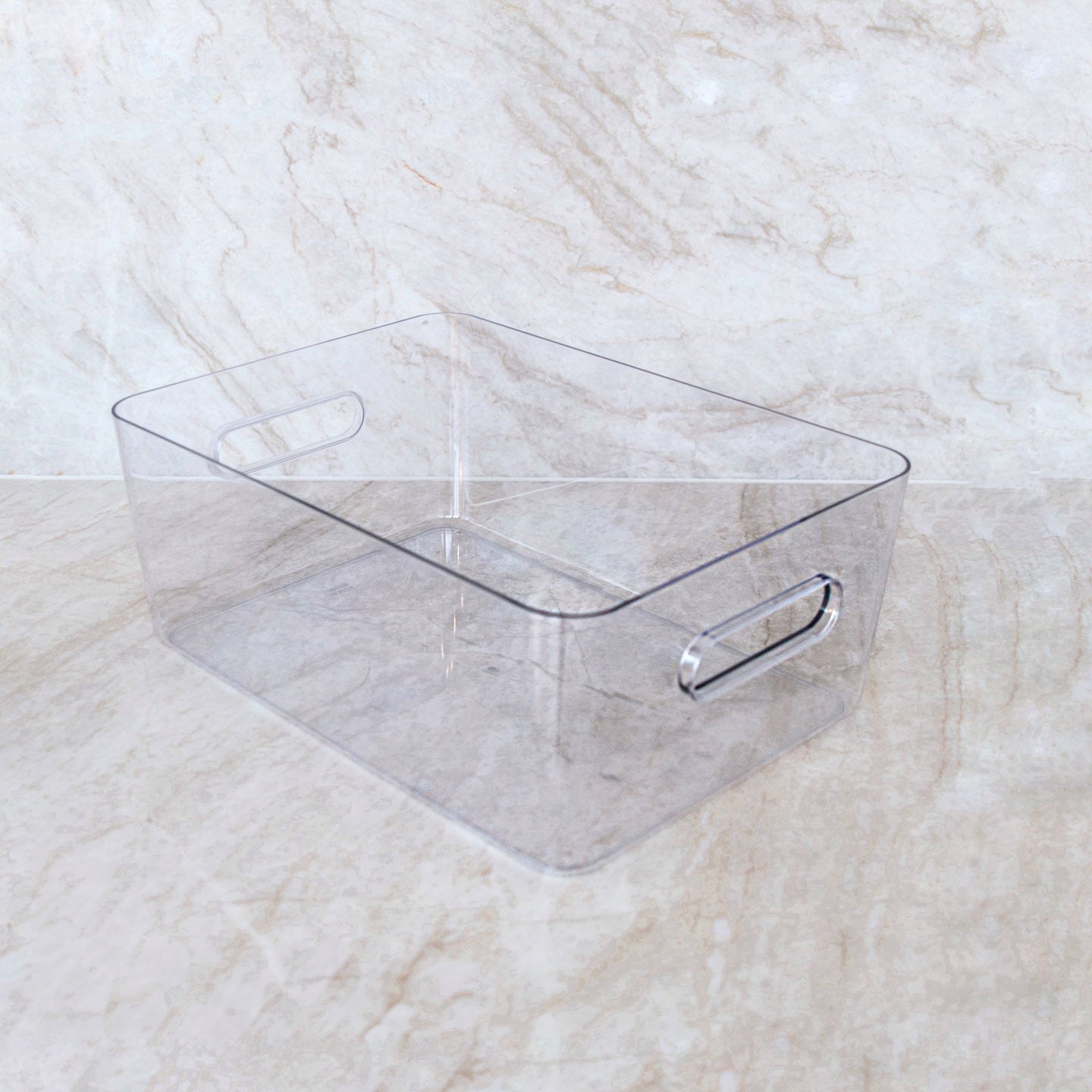
In deeper drawers, boxes can provide structure in two layers. Use a medium drawer box for long serving spoons, whisks, or bread knives, and supplement with smaller modules for elastic bands, roll of bags, and binder clips. Position the boxes so that the front always contains what you use daily, while accessories can be at the back. Stick to a few repeated sizes - this makes it easier to move things around and create symmetry if the contents change.
How to plan your cutlery drawer
- Map it all out: Empty the drawer and categorize - daily cutlery, serving utensils, small tools, extras.
- Measure and draw: Note the drawer's dimensions and sketch where the tray and modules should be placed.
- Create zones: Front zone for everyday items, middle zone for frequently used equipment, back zone for extras.
- Test and adjust: Place cutlery in the tray, tools in the organizer, and adjust until the grips feel natural.
- Maintain for 1 minute: When the drawer fills up, put things back in their zones - that way the system maintains itself.
From drawer to kitchen flow
A good cutlery drawer affects the rest of the kitchen. Start with the drawer you use most, and work your way from there. Once the structure is firmly established, it's easy to extend to the next drawers using the same principles and achieve a uniform, calm expression throughout the kitchen. If you need inspiration to complete the organization, you can see selected solutions under Popular products.