
A shoe rack provides peace in the hallway and wardrobe, because each shoe has its own fixed place. Start by measuring your width and height, and choose a solution that makes optimal use of the wall and closet. Think in levels: low shoes can be placed close together, while boots require height. Stick to a few repeating materials and sizes for a uniform look. This makes it easier to tidy up and find the pair you need. When you have an overview, the room feels more inviting and easy to use in everyday life.
Shoe rack
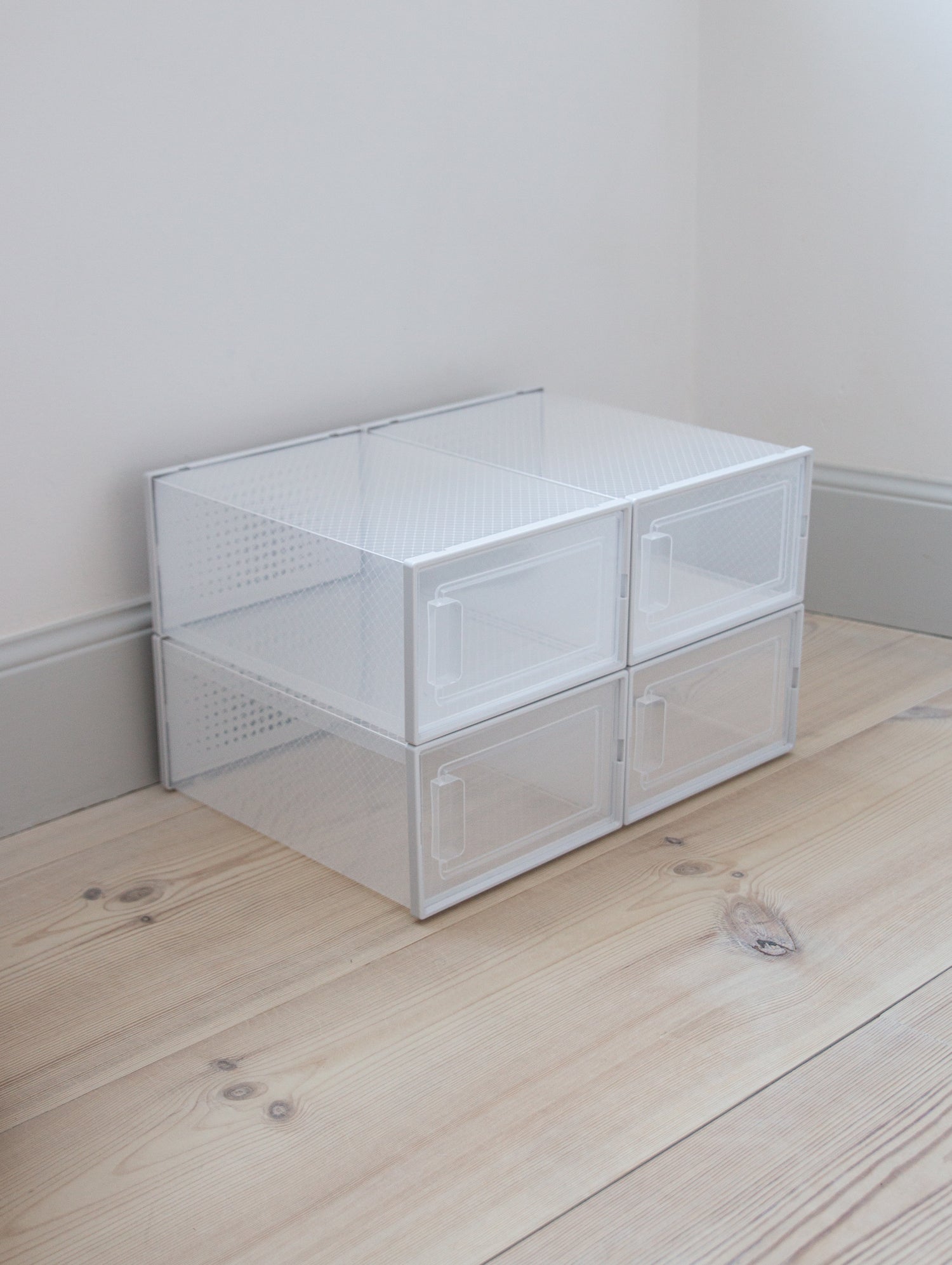
If you have wall space, a shoe rack is a simple way to keep the floor free and the pairs together. Divide into zones: everyday shoes at the entrance, training shoes further inside, and dressier shoes higher up. In cabinets with good depth, you can add an inner shelf to use the height effectively. Here, a pull-out solution such as a pull-out storage rack - stackable can help you see the entire row without moving other pairs.
Shoe boxes
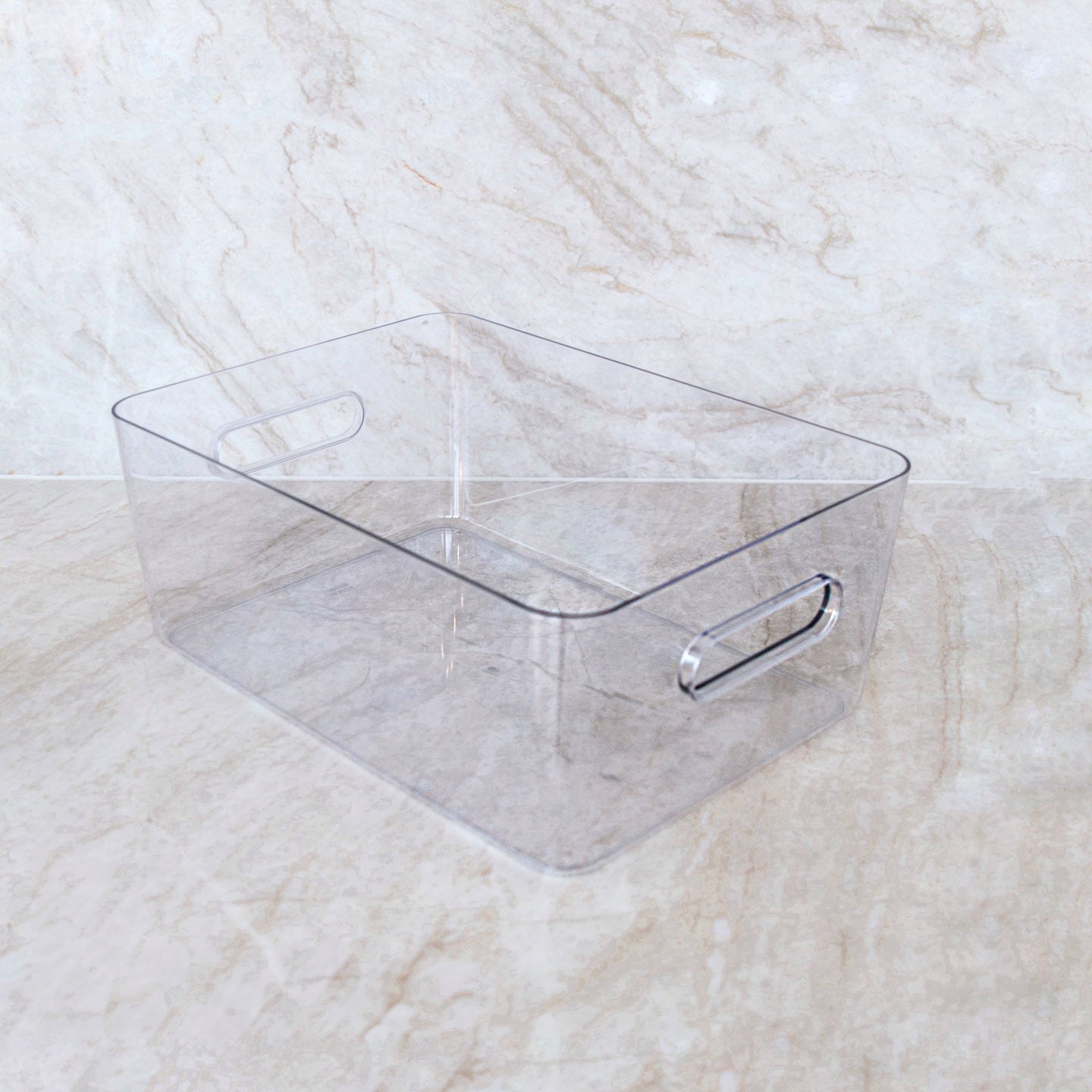
Clear structure is easy to achieve with shoe boxes. They collect each pair, protect against dust and make it easy to see the collection, even when stacked. Choose the size according to the type of footwear, and build in stable columns so that the height is used without clutter. For regular sneakers and flat shoes, the stackable shoe box small is a practical choice. For boots, chunky sneakers or larger men's shoes, the stackable shoe box large provides a little extra space.
How to choose size
- Everyday sneakers: small for compact storage
- Running shoes in larger sizes: large for more height
- Boots and high-top sneakers: large for room for shaft
- One pair per box provides faster overview and easy maintenance
Shoe cabinet
A shoe cabinet holds a lot if the layout is simple. Place everyday shoes at handle height, nicer pairs at the top and boots at the bottom, where the height is greatest. Work with fixed rows and the same distance between the pairs, so that everything is level. In deep cabinets, an extra level at the front can provide a double row without hiding anything. Sort with fixed categories per shelf - for example "work", "training" and "party" - so that the rack automatically guides where the shoes are put back.
Entrance shoe storage
In an open hallway, both structure and expression count. Choose a harmonious mix of shoe racks and closed boxes, so that the most used items are at the front, while extra pairs are collected away. Small accessories such as shoe care products can be collected in a long wooden box on a top shelf, so that the surfaces at the entrance are kept clean. Keep the floor clear, and make it intuitive to put your shoes away when you get home.
Wardrobe organization
A shoe rack works best as part of a complete wardrobe. Think flow: Entrance - shoe rack - outerwear - bags. Use uniform materials and repeated modules for a calm expression. Prioritize the first 120 cm in height for everyday pairs, so that the whole family can quickly reach them. Collect the rest in boxes or higher shelves. Get more inspiration in the wardrobe category Wardrobe , where you can find solutions that match your space and your routines.