
A well-organised shoe storage makes it easier to leave the house without clutter in the entryway. When shoes have designated spots, it creates order and makes it easier to keep the floor clear. Think in simple zones: daily use by the entrance, occasional use in the closet, and rarely used higher up or under the bed. It's about combining open solutions for quick access with closed solutions that create visual calm. Start small and build a system that suits your routines.
Storage boxes for shoes
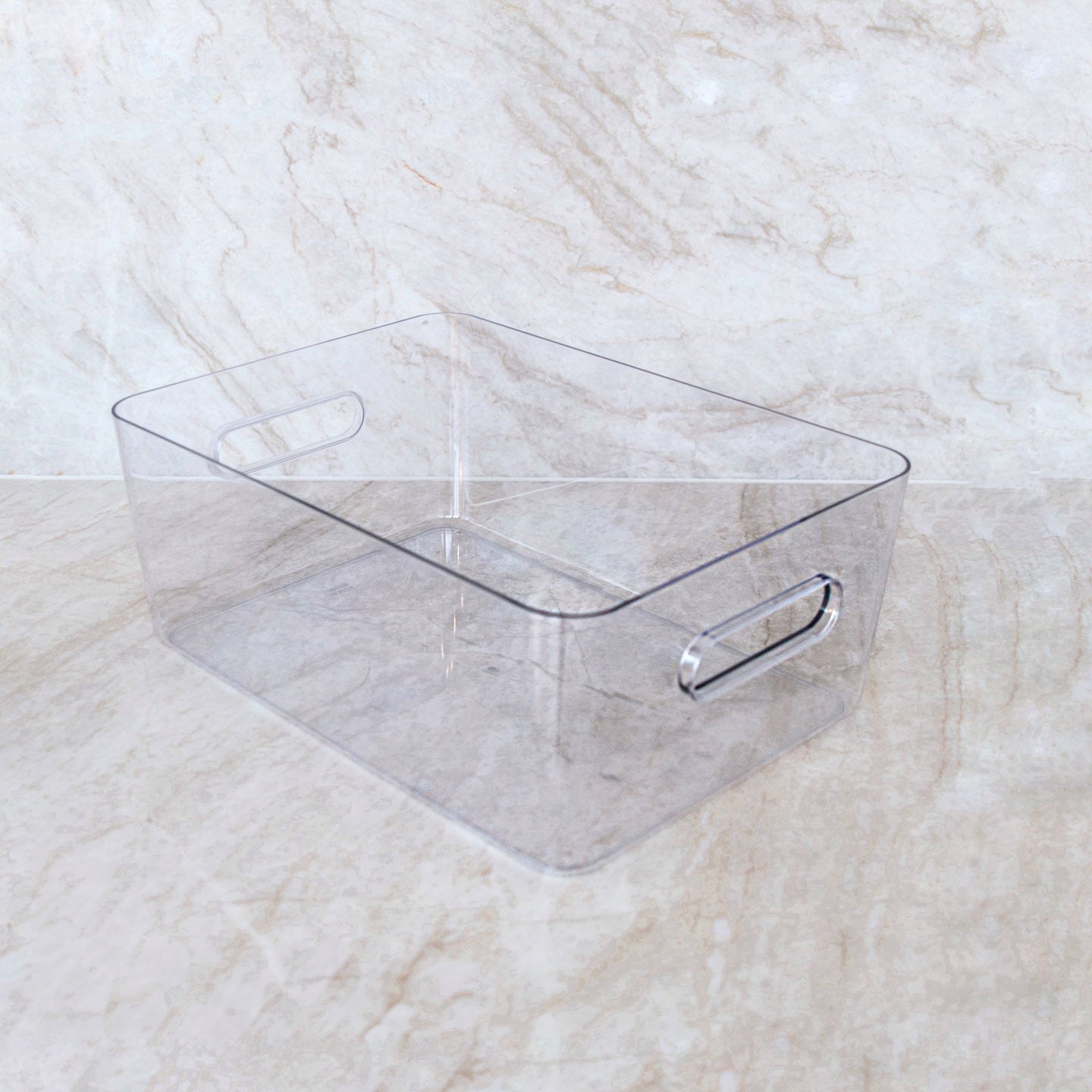
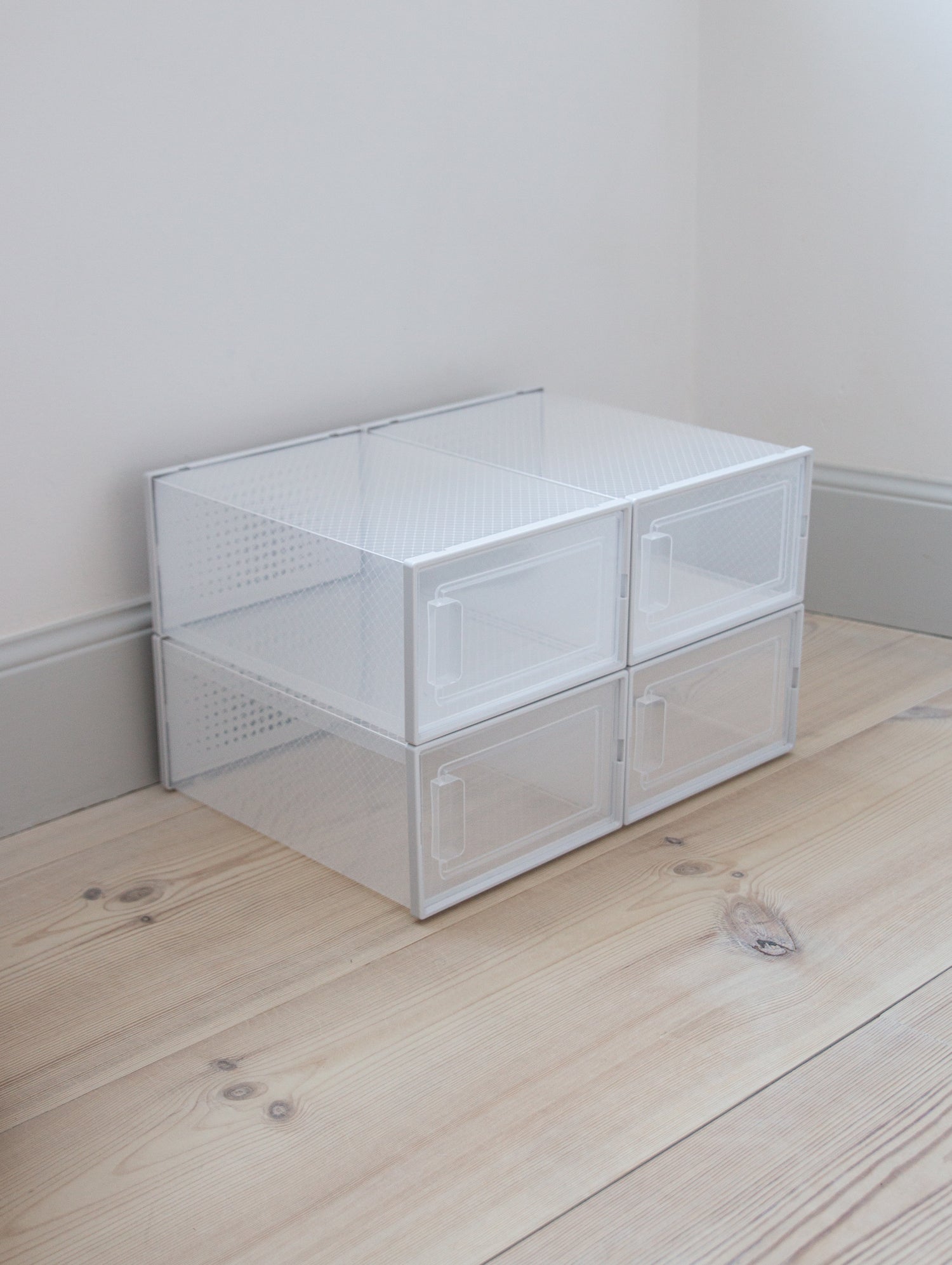
Boxes are a flexible solution when you want to utilise space under a bench, in a cupboard, or on shelves. Transparent boxes make it easier to see what's where, and uniform sizes create a calm expression. Use fixed categories, for example, sneakers in one place and boots in another. Place rarely used shoes at the top or furthest back, and keep everyday pairs by the entrance. If you need clear solutions, you can view our selection of boxes.
How to choose boxes for your shoes
- Flat shoes: Lower boxes that can stand side by side on a shelf.
- Sneakers: Medium sizes that can be stacked in two layers, if the shelf allows.
- Boots: Taller boxes or an open bottom shelf, so the shaft isn't crushed.
- Children's shoes: One combined box per child for a quick daily routine.
Shoe rack and shoe cabinet
If you have space, a shoe rack is practical for daily use. Measure the shelf depth so shoes can stand neatly without sticking out. Use the bottom shelf for sturdy shoes and the top shelves for lighter pairs. In a shoe cabinet, adjustable shelves offer flexibility, allowing you to create low spaces for flat shoes and taller sections for boots. Arrange lace-up shoes with the toes facing out, so you can quickly grab the pair you need. A simple principle is to organise them in rows by frequency of use from left to right.
Shoe storage in the entryway
The entryway works best when the flow is clear. Designate a fixed zone for everyday pairs, for example, two rows on a small rack or a low bench with space underneath. Avoid overfilling the same area – rather, have an extra shelf or a box for guest shoes, so the floor remains tidy. Small aids like self-adhesive solutions can keep shoe care items or shoehorns close at hand. Also consider where shoes are placed to dry, so they don't take up space in the main zone.
Organisation in the wardrobe
When shoes live in the wardrobe, it's beneficial to utilise the space under hanging clothes. Place a row of open boxes on the floor or a low shelf with fixed spots per category. If you have many pairs, divide them by type and occasion: everyday, workout, and dress shoes. A simple picture on the front of a box can help the entire household find the right pair without opening everything. Also, explore options for creating an overview in drawers and cupboards with wardrobe organisers.
Inspiration and simple routines
A system only works if it's easy to use in everyday life. Agree on a quick 2-minute reset, where shoes are put away when you come home. Make it easy to rotate between pairs by freeing up the front row for today's shoes and moving yesterday's back one step. If you need ideas for a simple entryway upgrade, you can find inspiration in popular products that help with home organisation. Small adjustments like fixed zones, uniform boxes, and clear separation between everyday and occasional shoes create calm and make the morning routine smooth.