
Kitchen drawers are the heart of a functional kitchen. When everything has its place, cooking becomes calmer, and daily life runs more smoothly. Think in terms of zones and simplicity: group utensils by task, choose a few consistent sizes for inserts and containers, and create a harmonious look that supports your routines.
Drawer organization in the kitchen
Start by defining what each drawer should hold. A drawer for cooking near the stove, one for preparation near the cutting board, and one for serving by the dining area. Place frequently used items at the front and in the middle, and store seldom-used utensils at the back. Stick to a few types of dividers, so it's quick to put things back in place.
How to arrange your drawers
- Daily use: Whisks, spatulas, measuring spoons, and cooking spoons at the front.
- Preparation: Foil, parchment paper, clips, and dough scrapers grouped in one box.
- Serving: Spoons, salad servers, and table utensils close to the dining area.
Cutlery tray and tools in order
A good cutlery tray provides an overview at first glance. Use a cutlery tray for knives, forks, spoons, and teaspoons in designated compartments. Place spare cutlery in the back row and daily cutlery at the front. If you have an extra drawer for utensils, group short tools in one section and long cooking spoons in another. Avoid overflow by removing duplicates you rarely use. The simple setup makes tidying intuitive for the whole family.
Spice drawer with a full overview
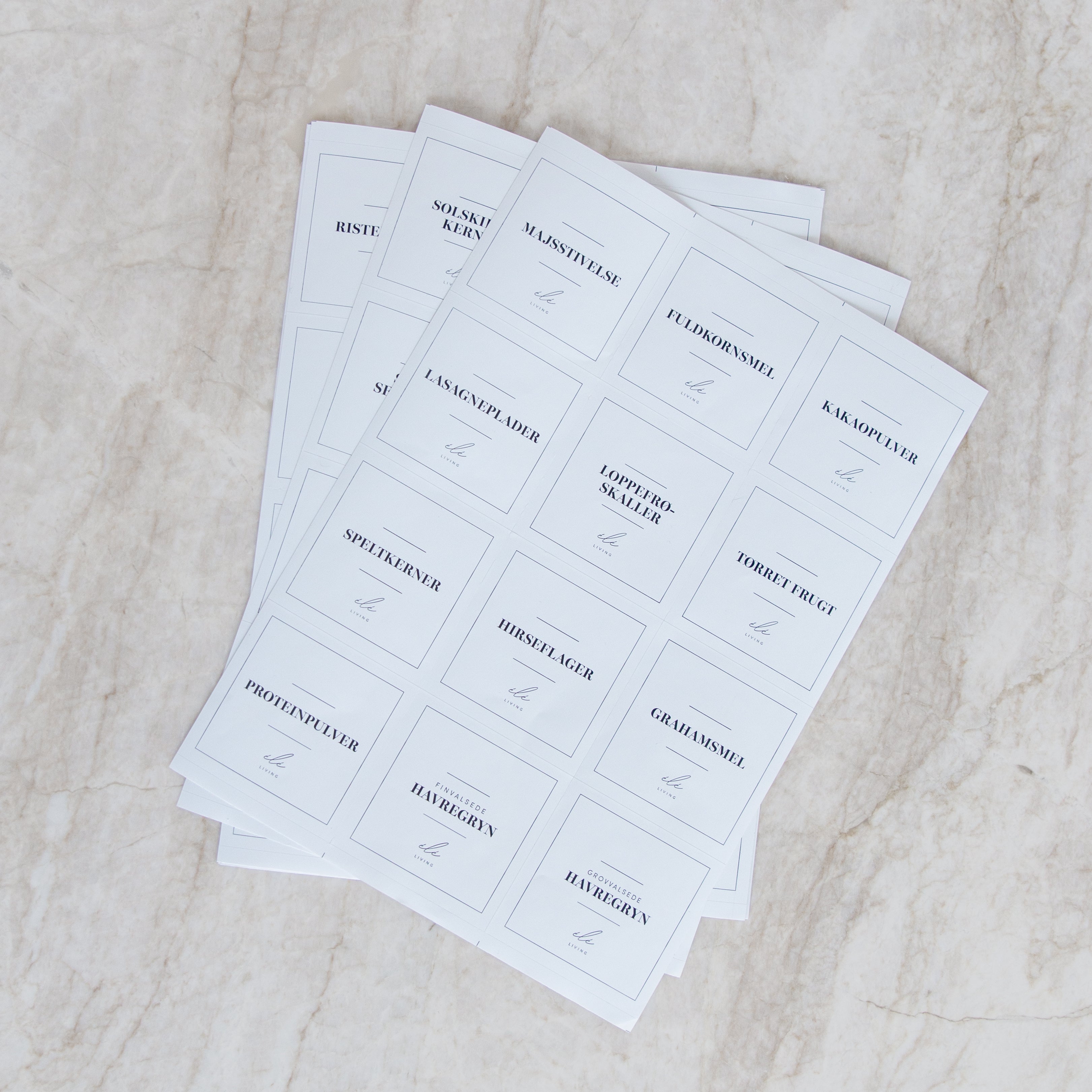
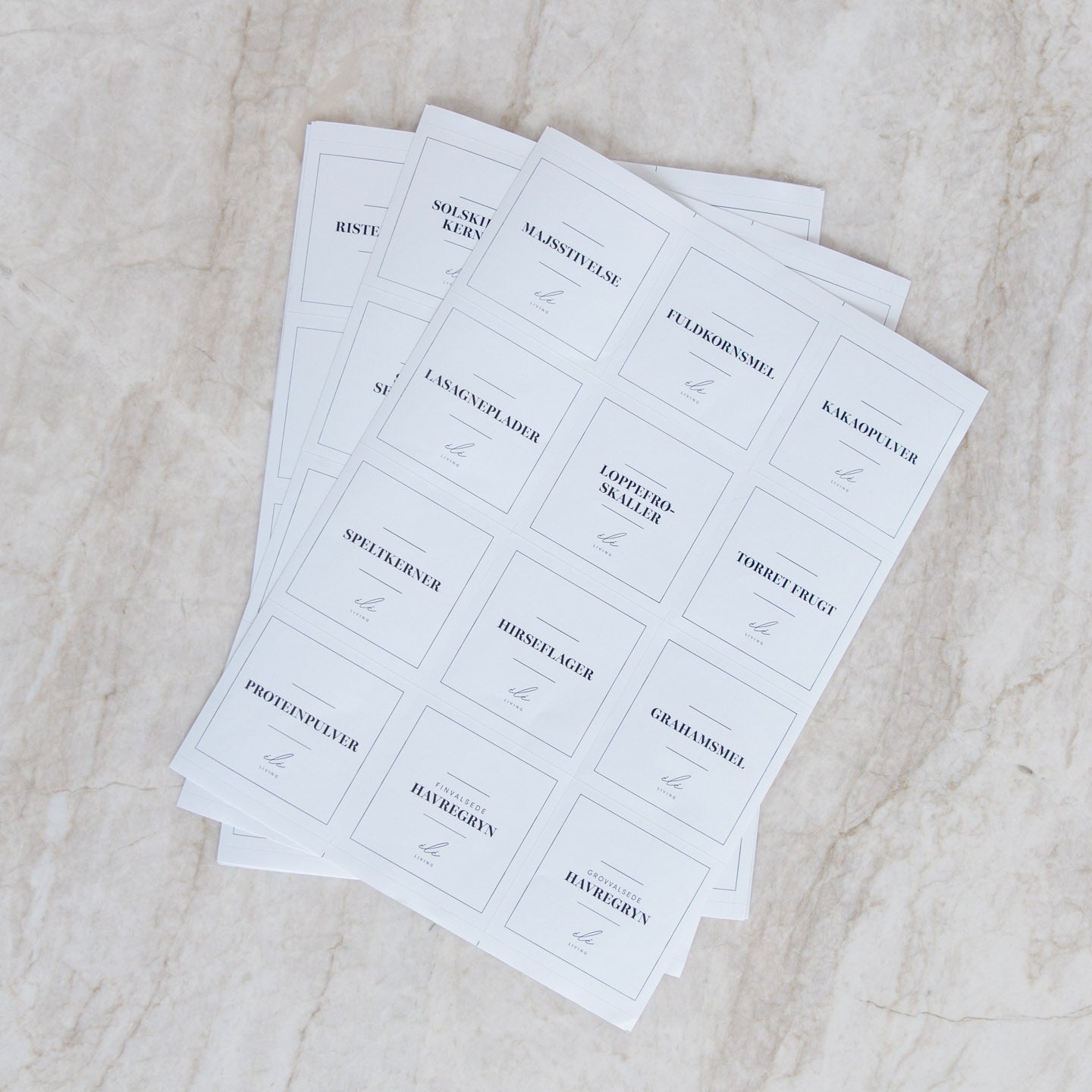
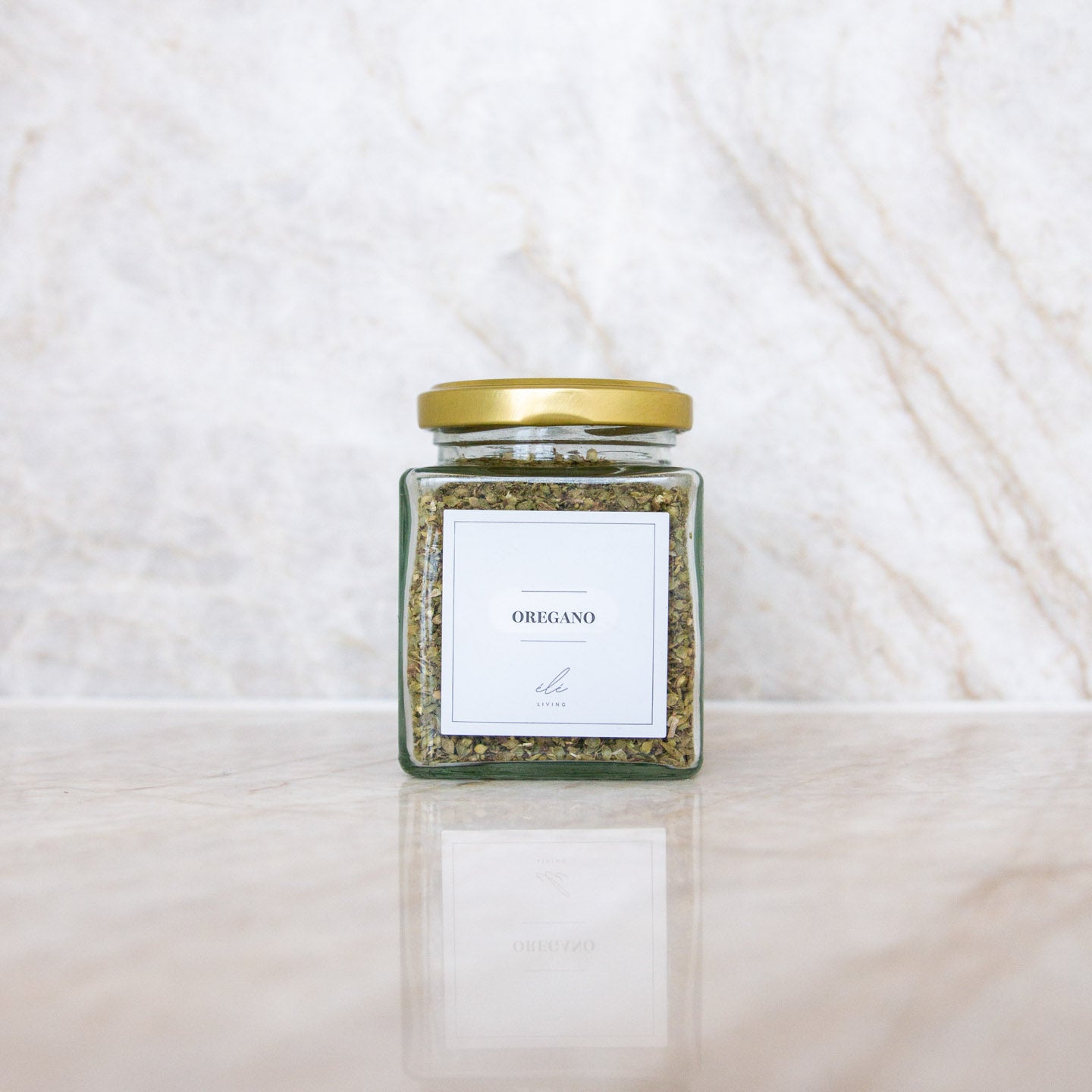
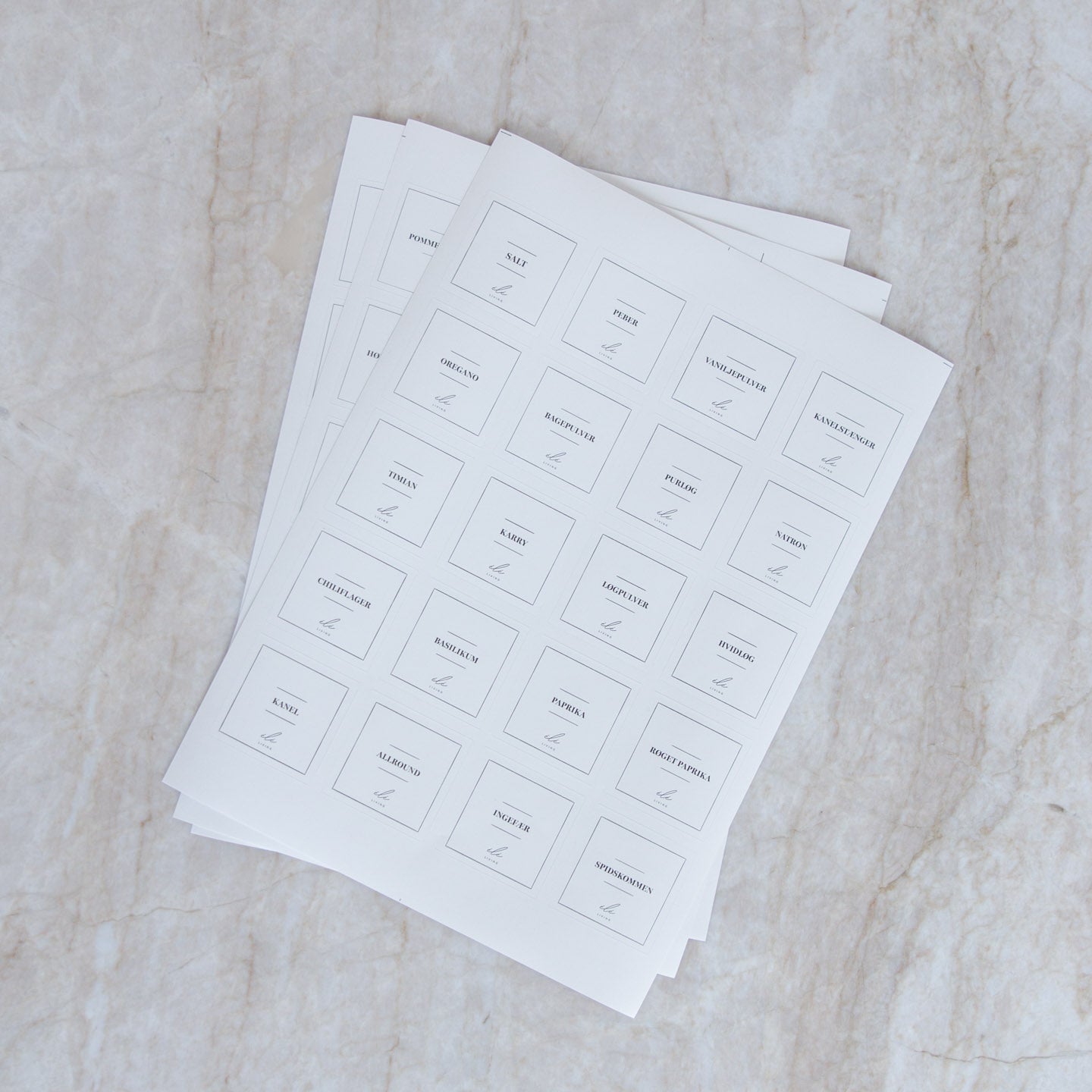
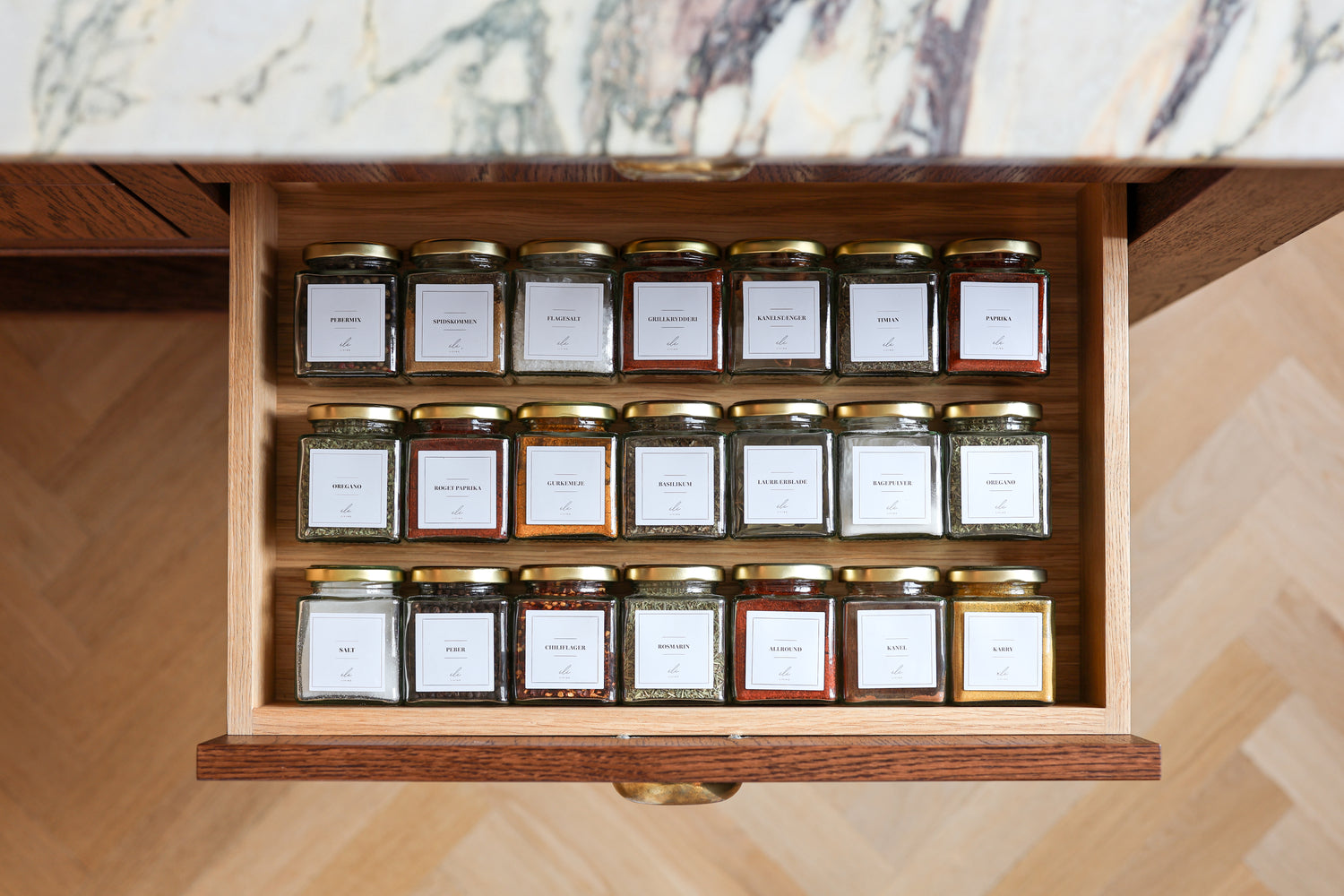
A shallow drawer is well-suited for spices. Uniform jars in a line make it easy to find curry, paprika, and oregano without searching. Choose spice jars with silver lids of the same size for a calm look and easy refilling. Supplement with matching spice labels so you can read from above. Sort by food type or alphabetically and place the most used spices at the front of the drawer. Tip: Keep a small section in the drawer for whole spices like peppercorns and bay leaves so they don't mix with the rest.
Storing dry goods in drawers
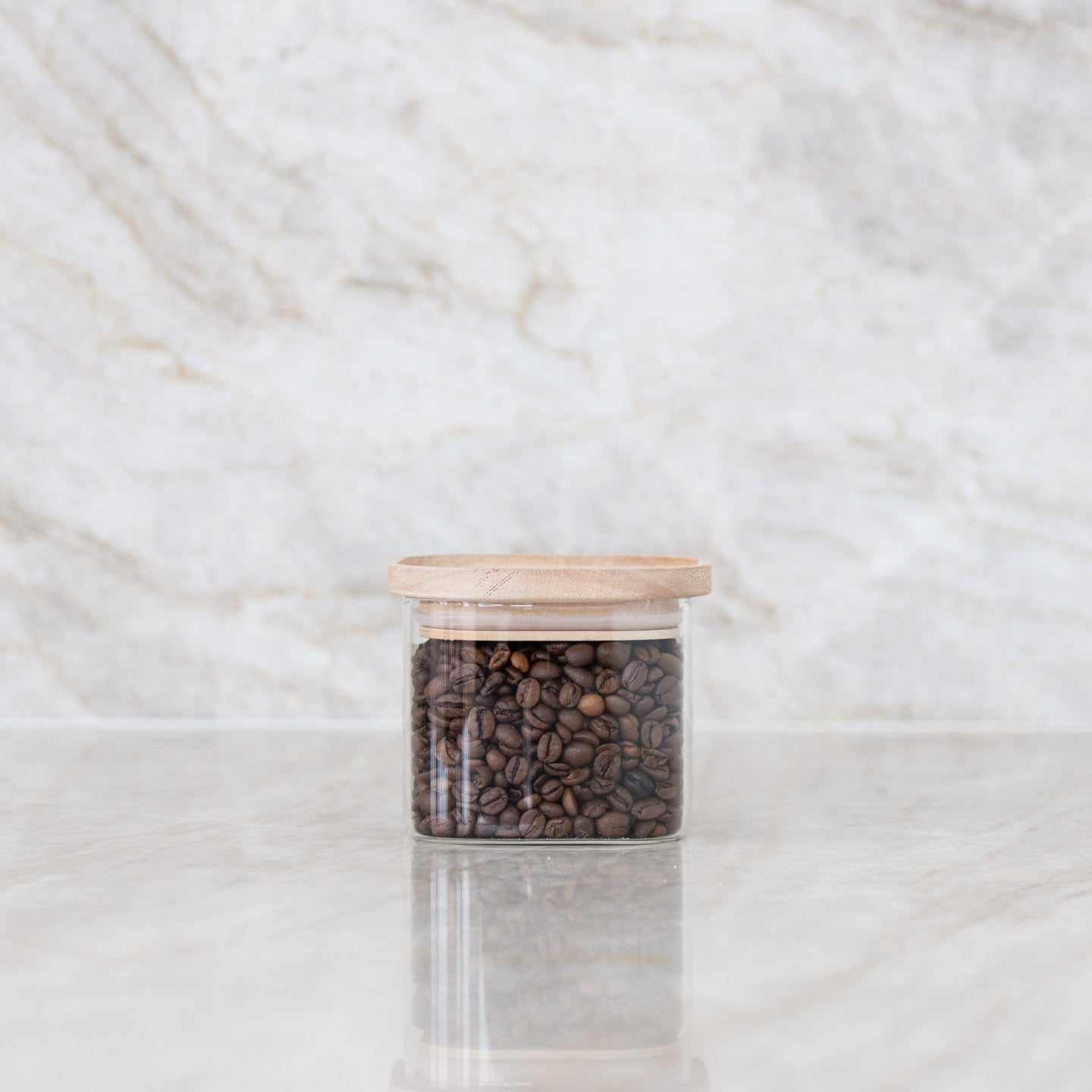
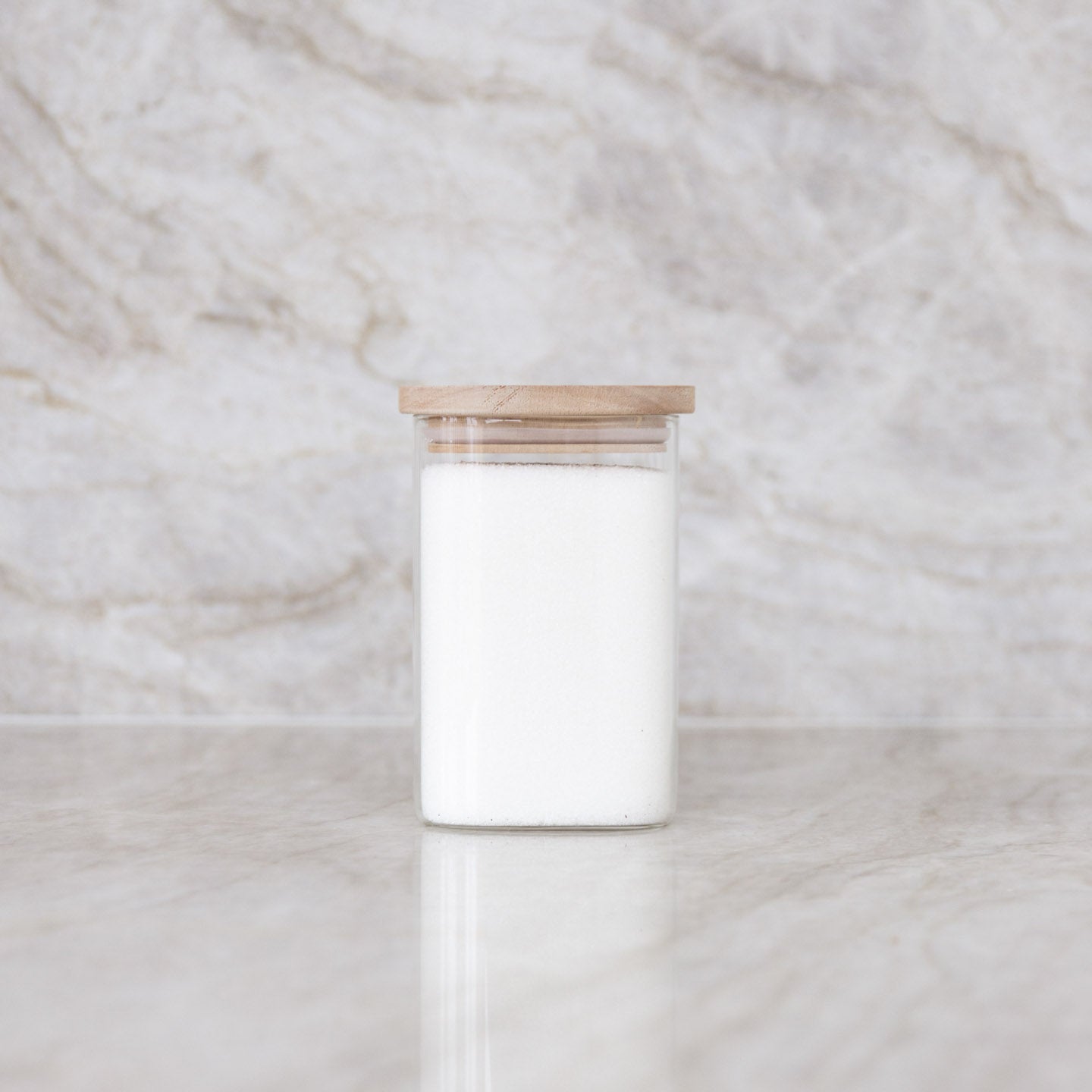
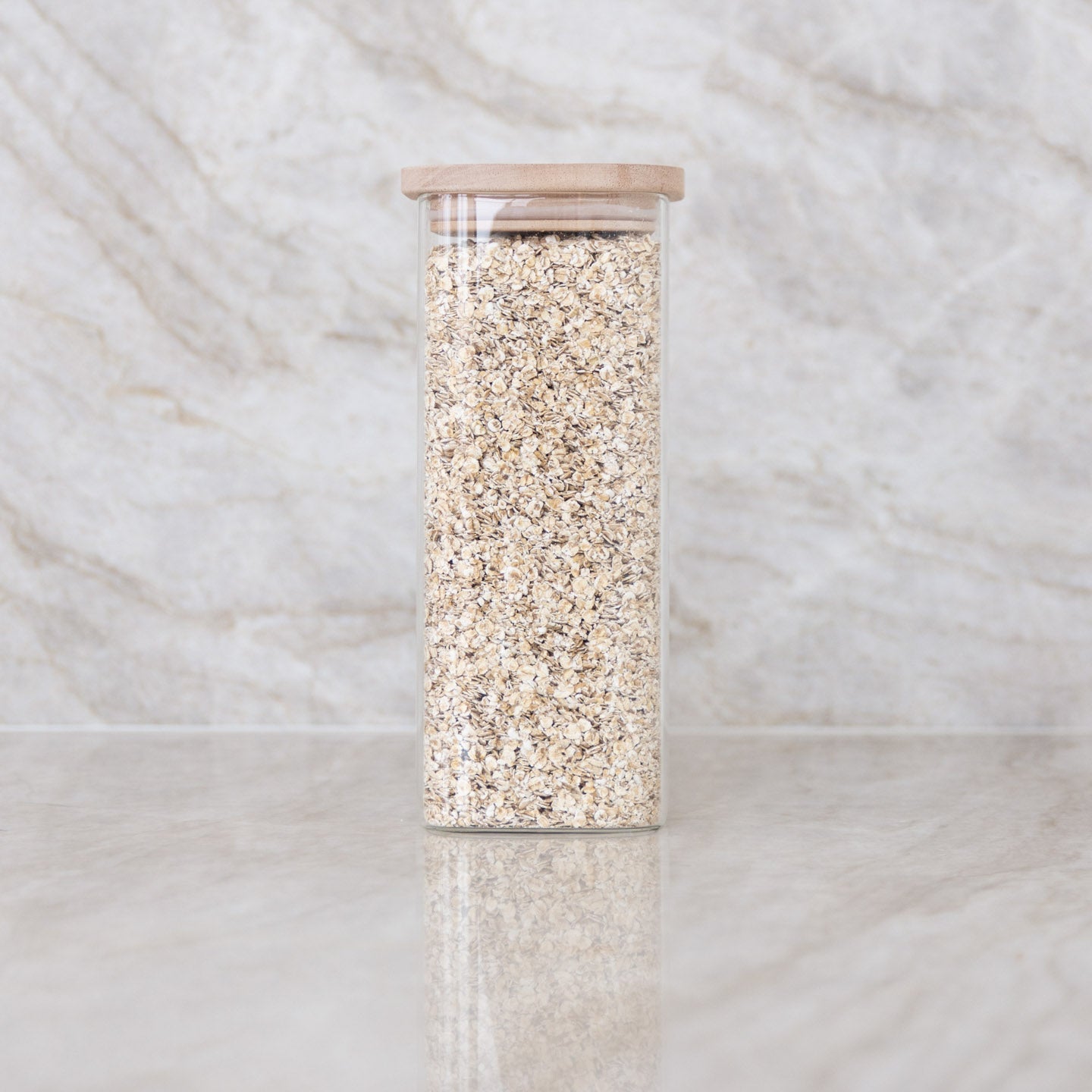
Deep drawers are suitable for dry goods. Uniform containers make it easy to stack and organize pasta, rice, oatmeal, and nuts. Square storage jars 500 ml are great for small quantities like seeds and nuts. Glass provides an overview from above and helps keep pests out. Place heavy items like flour and sugar at the back of the drawer and lighter items at the front so the drawer glides easily. Place a spoon in the drawer dedicated to measuring, so you avoid moving contents around. Consider sticking to 2-3 container sizes so everything stands stably and calmly.
Small items and accessories without clutter
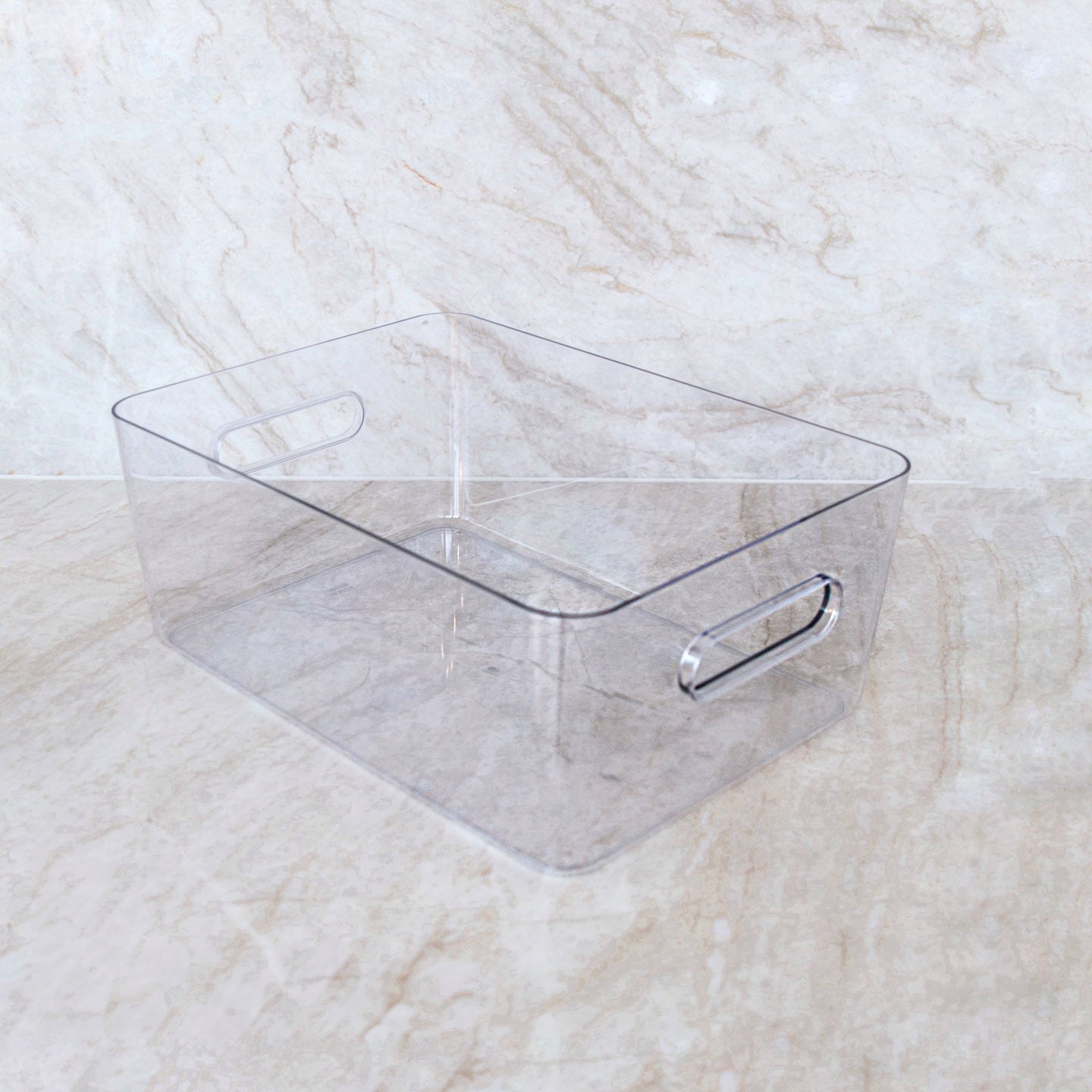
Gather small items like cookie cutters, cake decorations, bag clips, and elastic bands in a simple divider. A medium drawer box is suitable for accessories that would otherwise be loose. One box for foils and parchment paper, one for cloths and sponges, and one for lunchbox items makes daily life easier. Place the boxes to support your routine – what you use multiple times a day goes at the front. When you put items back, maintain the same division. This saves time and keeps the drawers calm to look at.
A calm expression throughout the kitchen
- Stick to a few repeated materials like glass and wood for a harmonious overall impression.
- Put lids on glass containers for visual calm and stackability, where drawer height allows.
- Assign fixed categories per drawer, so tidying takes seconds after cooking.
Conclusion
Kitchen drawers work best when content is curated and consistently divided. Use a simple cutlery tray, uniform spice jars with clear labels, and practical boxes for small items. Small adjustments in placement and consistent sizes create an overview, calm, and more ease in daily life.