
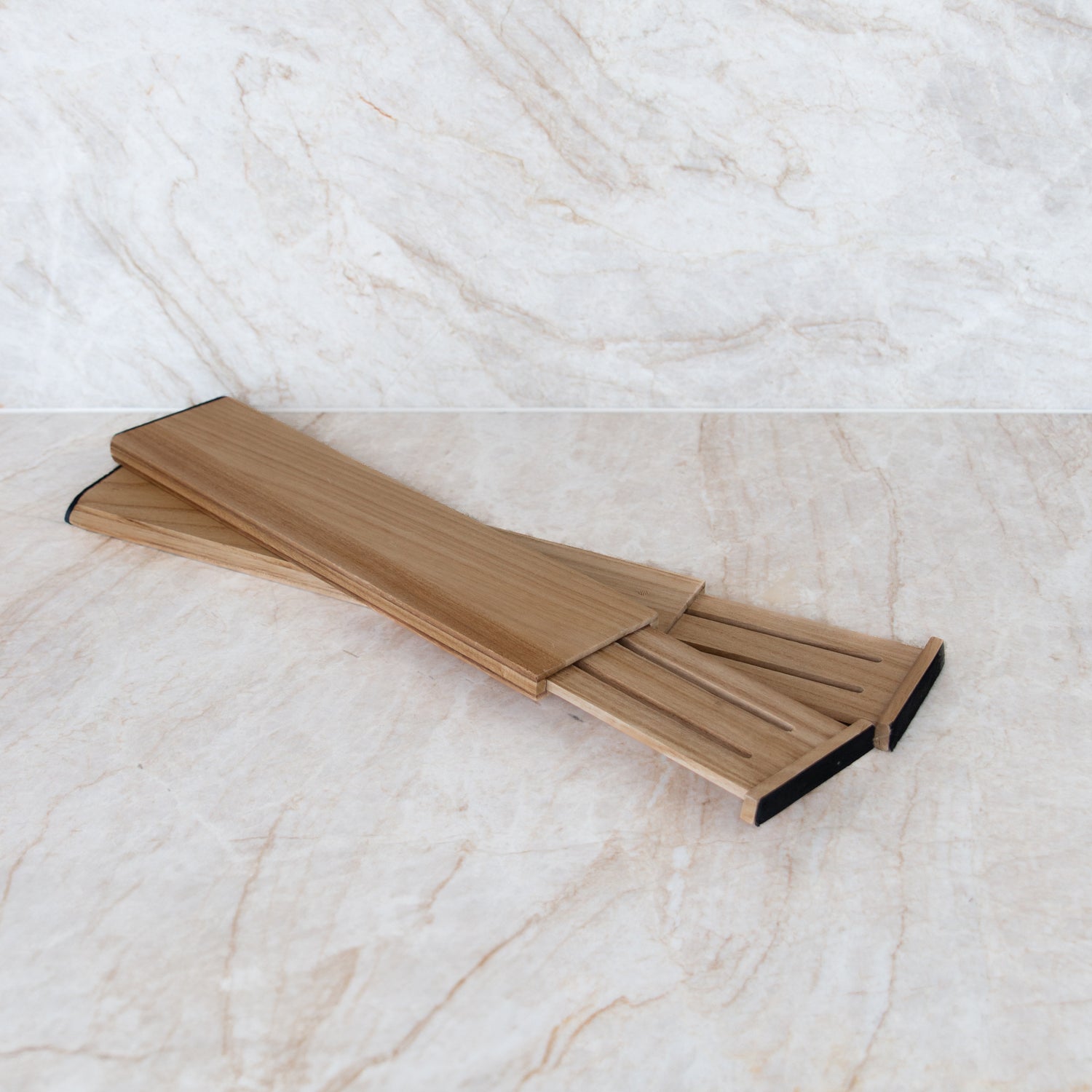
A well-organised cutlery drawer creates calm in the kitchen and simplifies daily routines. When knives, forks, spoons, and specialty cutlery have fixed places, setting the table and cooking become quicker, and the drawer appears aesthetic and organised. At élé living, we work with simple principles for organisation, so the expression is calm, and function and design go hand in hand.
Cutlery drawer organisation
Start by emptying the drawer and measuring its internal width, depth, and height. Then divide it into zones: daily cutlery at the front, serving cutlery in the middle, and special utensils at the back. Place the most frequently used items where your hand naturally lands, and group similar types in their own sections. Stick to a few repeated sizes to maintain a calm appearance.
Step-by-step guide
- Measure the drawer and choose modules that utilise the entire surface.
- Arrange cutlery in fixed rows – knives, forks, dinner spoons, teaspoons.
- Create an “overflow zone” at the back for rarely used specialty cutlery.
- Finish with a quick test: Close and open the drawer, and adjust widths so nothing moves.
Drawer divider for cutlery
A flexible drawer divider makes it easy to adapt the compartments to your specific cutlery. Adjust the widths so each row fits one type – this minimises mixing and saves time in daily life. Place knives and forks closest to your body and spoons further away, if that matches your routine at the kitchen counter. If you have long carving forks or salad servers, give them their own section so they don't crowd the daily rows. Think in straight lines and repetitions – this provides visual focus and better flow.
Boxes in the cutlery drawer
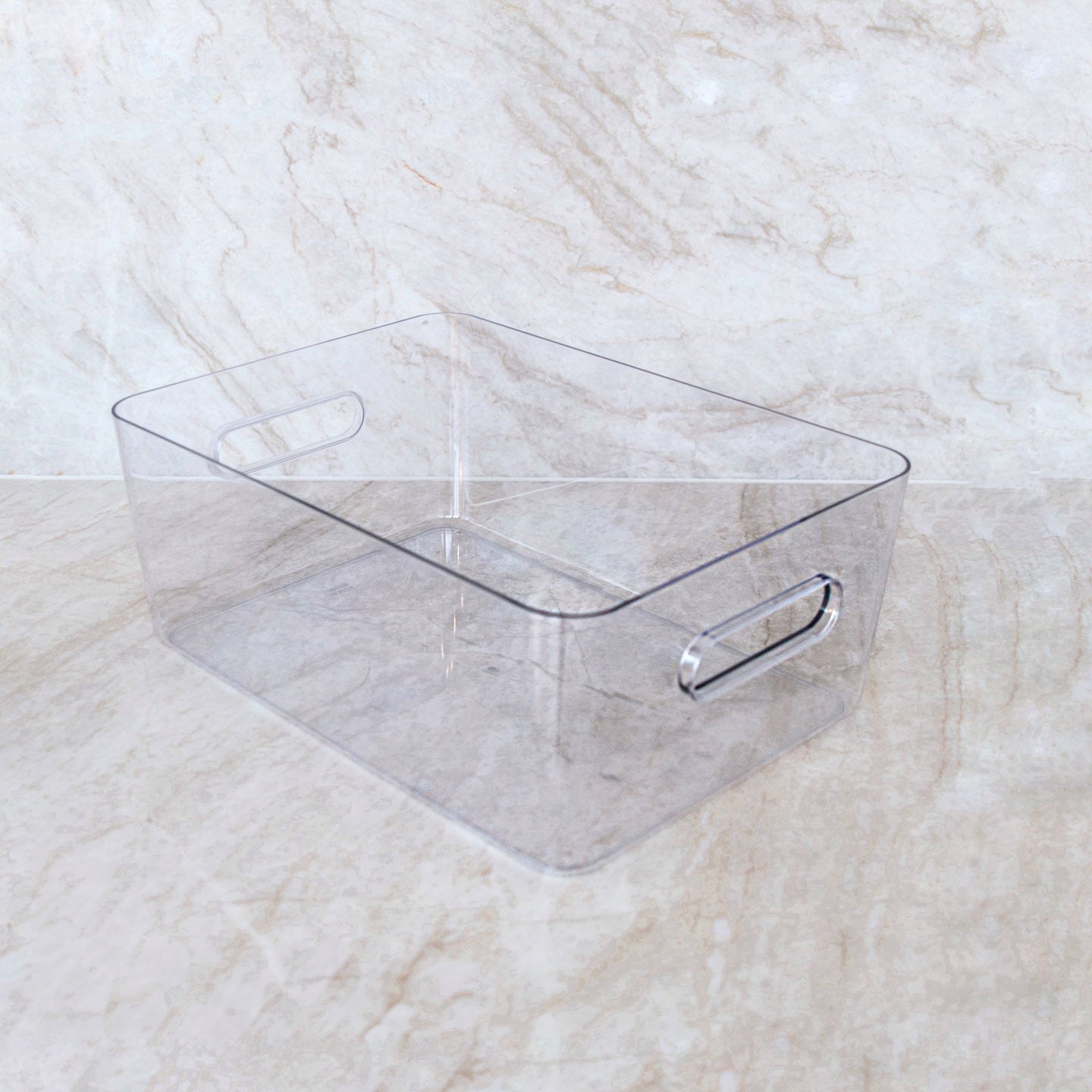
Small modules help tame the loose small items that often create clutter. A small drawer box is suitable for items such as corkscrews, measuring spoons, straws, and bag clips. Place the box on the side or at the back to keep daily cutlery free. Use only a few categories per box and keep the content uniform. This makes it quick to grab and put away again.
Cutlery tray alternatives
If you prefer not to use a classic cutlery tray, you can build a modular drawer with adjustable dividers and boxes. The advantage is flexibility: The drawer can be changed when you update your cutlery or acquire new specialty cutlery. Look for modules that can be combined lengthwise and crosswise, so the entire bottom is utilised. Supplement with a narrow row just for teaspoons or reusable straws, if they are used daily.
Space optimisation and maintenance
A tidy cutlery drawer stays organised better when the structure is simple and easy to follow. Agree on a fixed placement for each type of cutlery and do a quick weekly review, removing anything that doesn't belong in the drawer. If you want to extend the organisation to the rest of the kitchen, you can see more solutions under kitchen.
Quick tricks that work
- Divide into zones: daily at the front, rarely used at the back.
- Use modular division: dividers for rows, boxes for small items.
- Standardisation: group one type per compartment for quick retrieval.
- Check the fit: adjust widths so cutlery lies stably.
With a calm structure, simple materials, and thoughtful placement, you get a cutlery drawer that supports the rhythm of everyday life. Small adjustments make a big difference – and when the layout suits your habits, it's easy to maintain order over time.