
A good cutlery insert creates peace and order in the kitchen drawer. When your forks, knives and spoons have fixed places, it becomes easier to set the table and put things away after cooking. At élé living, we work according to the principle of not filling your home with more than you need. A simple division that suits your everyday life is often what works best. Think in clear zones and short movements from drawer to table. This is in line with well-known principles of order and harmony, where fixed places and simple systems make everyday life run smoothly.
Cutlery tray in drawer
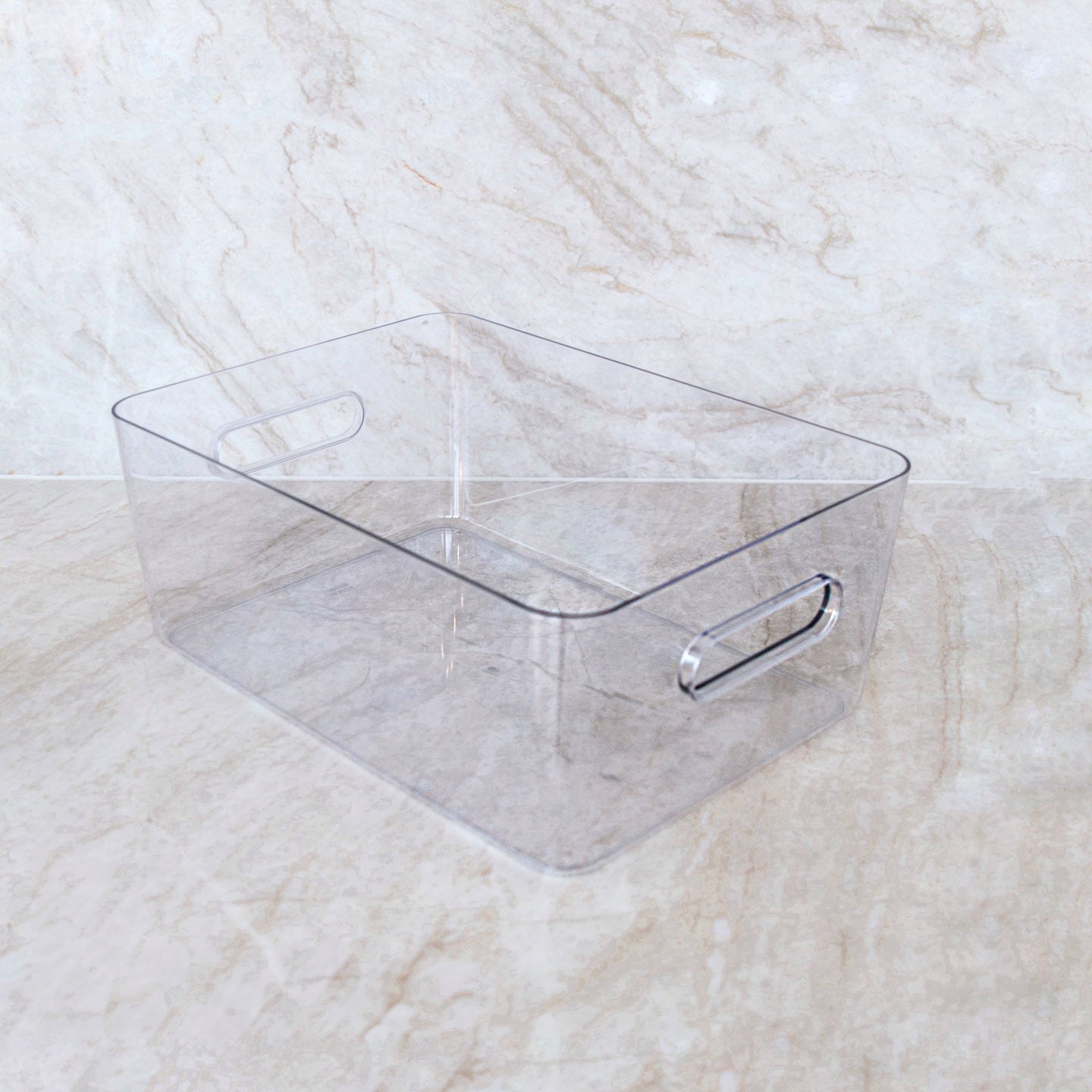
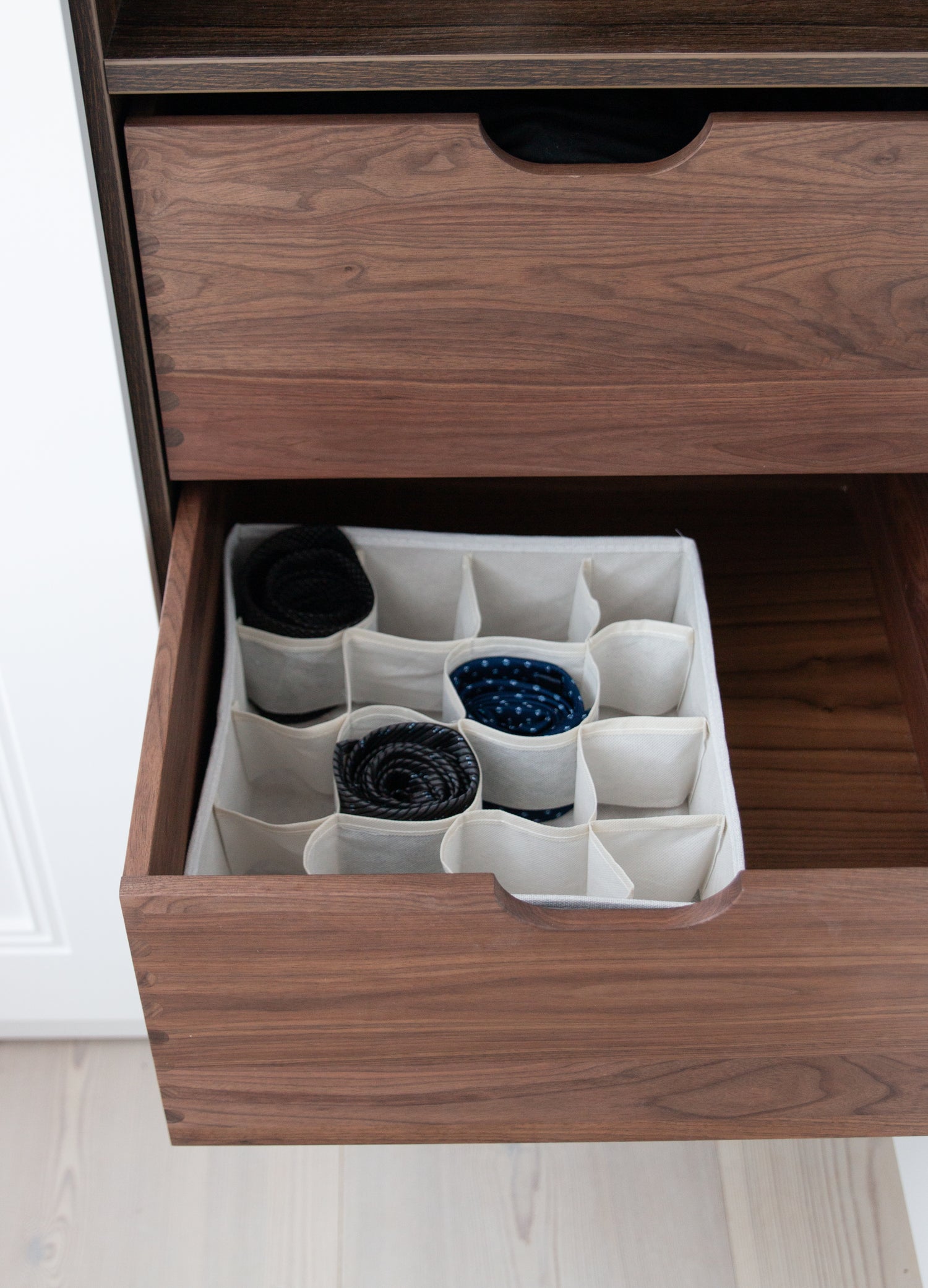
Start by using the entire width of the drawer. Place the most frequently used pieces of cutlery front and center. Place long utensils such as whisks or chopsticks in a long, narrow section on the side so that they don't mix with everyday cutlery. If you need extra space for small items such as dessert forks or serving spoons, you can add modular division with, for example, the small drawer box . This type of divider makes it easy to adjust the layout if your needs change. Keep it simple and avoid too many small compartments so that the drawer is quick to use in practice.
Drawer organization in the kitchen
Arrange the drawers according to the routines in your kitchen. The top drawer can hold everyday cutlery and openers. The next drawer can collect serving cutlery and kitchen utensils. Put kitchen scissors, measuring spoons and straws in a separate section so that small parts don't get lost. Stick to a few repeating sizes on the inserts so that the expression is calm and you can move them around as needed. If you need inspiration for the entire kitchen, you can explore our solutions for Kitchen .
Dimensions and installation of cutlery insert
An insert should fit the width, depth and height of the drawer. Always measure the inside of the drawer and check that inner rails or edges do not take up space. Choose a fixed insert for standard dimensions or a modular partition if your drawer has special dimensions.
How to measure correctly
- Measure the interior width, depth and height in millimeters.
- Compare the measurements with the outer dimensions of the insert.
- Check that the drawer still slides freely when the insert is inserted.
- Place the most used parts at the front, and finish by fine-tuning the width of the compartments.
Materials and designs to suit your kitchen
Choose materials that match your kitchen and your use. Bamboo gives a warm, natural look and goes well with wooden fronts and warmer tones. Plastic and composite can be practical in drawers with many small items, where you want completely straight edges. If you want to combine a classic cutlery insert with extra division, you can supplement with stable boxes in neutral shades from our selection of Boxes . Keep colors and materials consistent for a calm look, and use few sizes repeated in the drawer to make the system easy to maintain.
Get started in 15 minutes
Lay out the cutlery on the table in categories, measure the drawer, and choose a simple division. Start small and build up if more compartments are needed. If you want to get started quickly, you can see our curated Starter Kit , which helps you create structure from day one. Finish by putting each category back in its section. Agree as a family that cutlery always goes in the same compartment. Small habits keep the drawer neat in the long run.
With a well-thought-out cutlery insert and a few, clear zones, you get a kitchen where everything has a logical place. This provides an overview, fewer interruptions while cooking and a calmer everyday life at the dining table.