
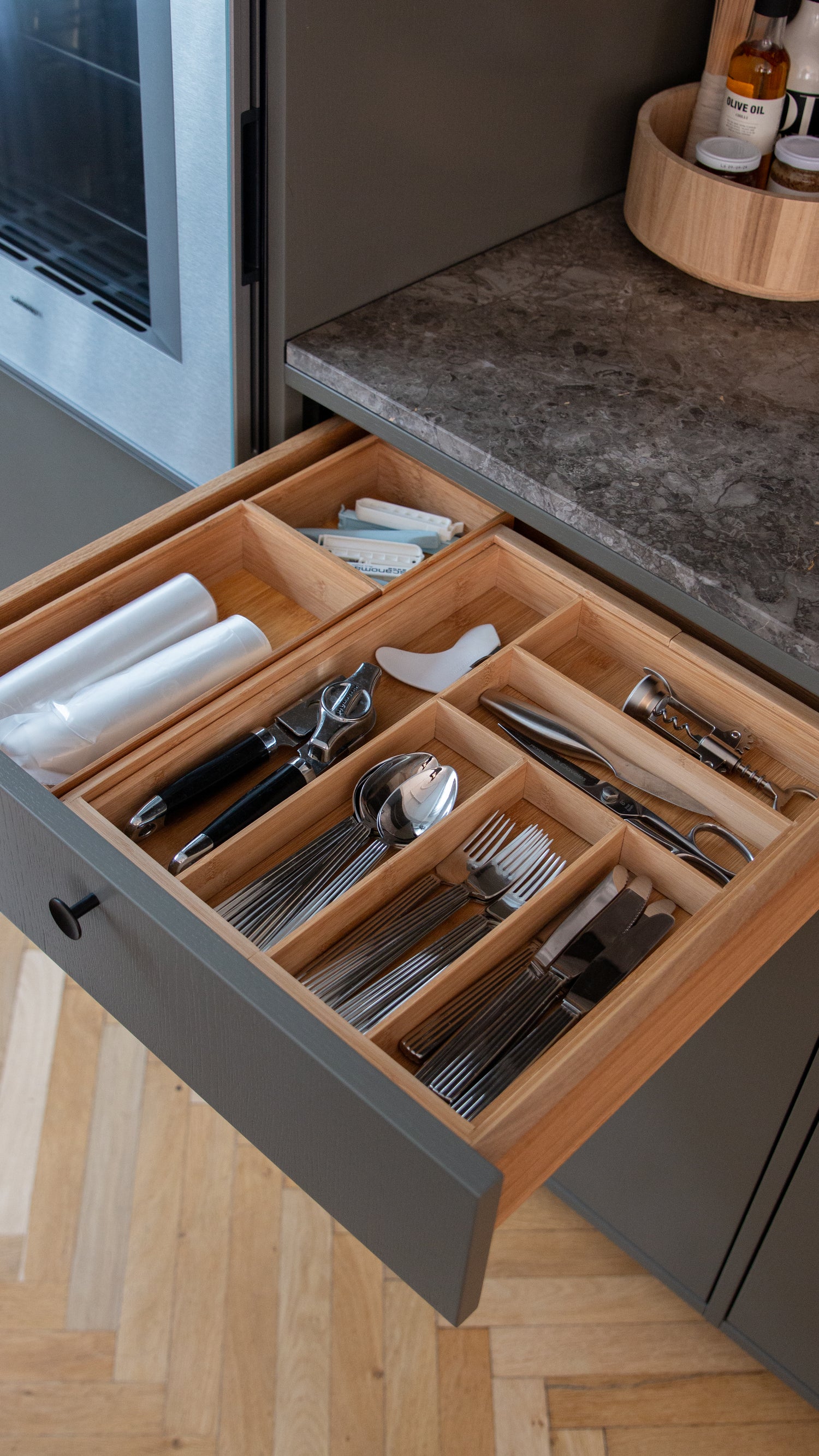
A cutlery tray in the drawer provides peace of mind and overview in everyday life. When each category has its own fixed place, you can quickly find what you use most, and small utensils don't mix with cutlery. Good division makes use of the entire width and depth of the drawer, so nothing gets lost at the back. Choose a solution that suits your measurements and routines, and lift the tray out when you want to wipe under it.
Cutlery drawer divider
Start by dividing the drawer into clear zones. Put forks, knives and tablespoons at the front so that they are within easy reach. Put dessert spoons, cake forks and party cutlery further back. Use a section for small utensils such as teaspoons, peelers and measuring spoons so that they don't get lost among the cutlery. A single system is easier to maintain than many small variations, so stick to a few consistent compartment sizes. If you need to supplement, modular storage boxes can also be used as a divider in the drawer – see the selection under Boxes .
How to get started
- Measure the drawer's inside width, depth and height under the countertop.
- Choose a tray that takes advantage of the width and combine with smaller compartments if there is room to spare.
- Place everyday cutlery at the front and less frequently used cutlery at the back.
- Test the opening-closing movement before filling up so that nothing gets stuck.
- Adjust after a week – move rooms if something is used more often than expected.
Bamboo cutlery tray
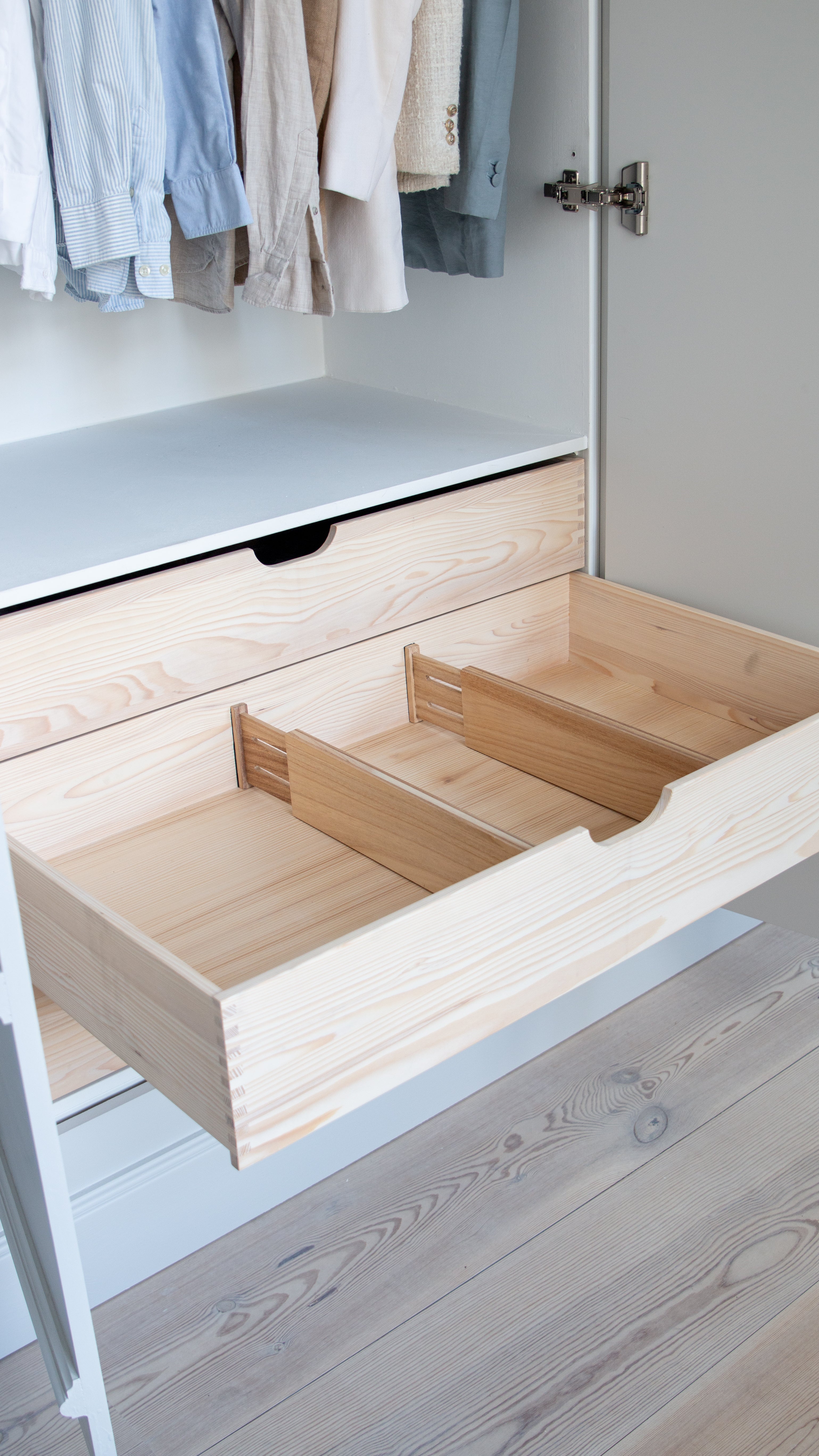
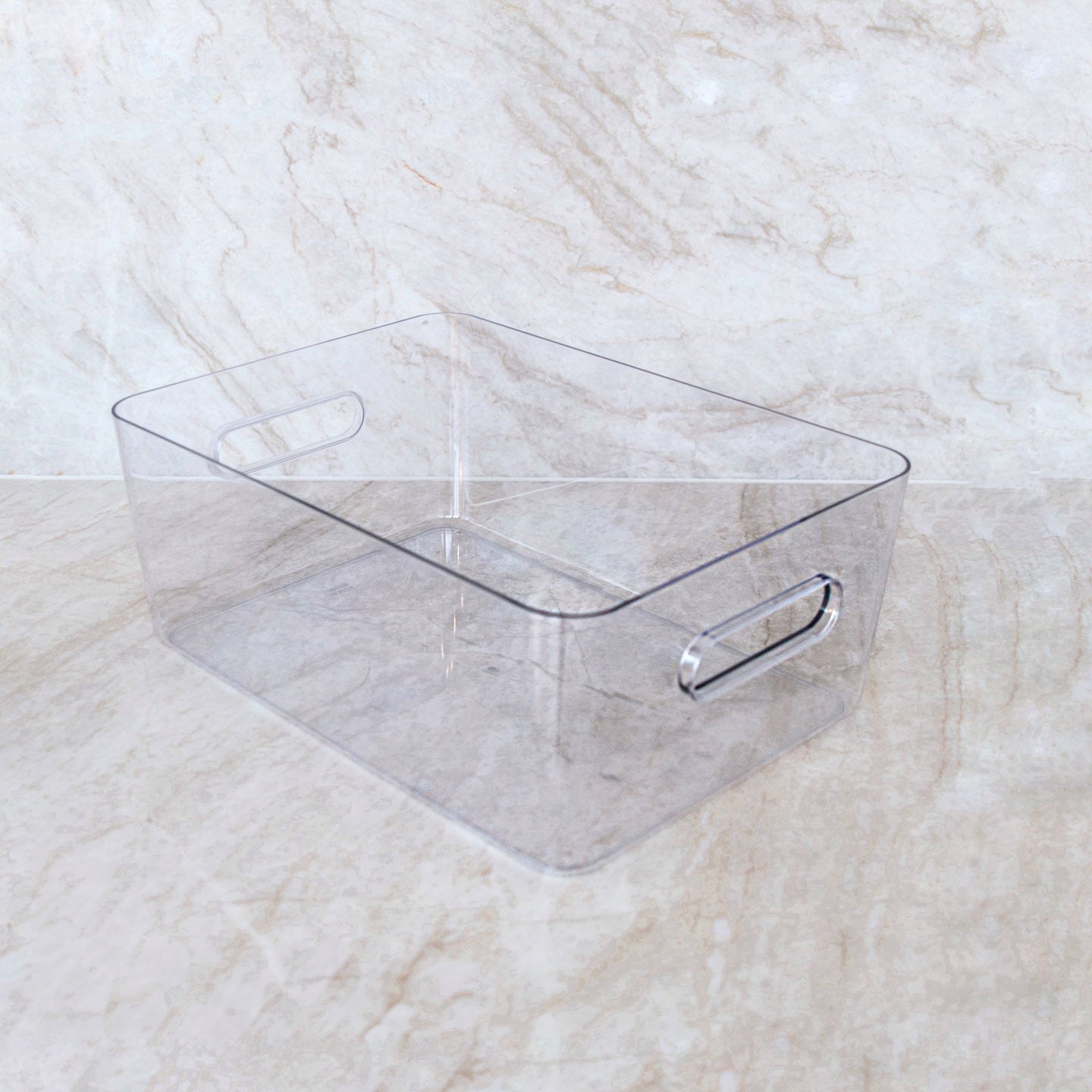
Bamboo and wood give a natural, warm look that matches many kitchens. Choose a model with fixed compartments for standard cutlery and a few larger sections for long utensils. Plastic inserts can be light and modular if you often adjust the layout. Consider a solution where small and large compartments can be combined to meet your exact needs. See dividers and trays together under Kitchen , where you can match the material and dimensions with the rest of the drawers.
Choose the material
- Bamboo and wood: solid base and a calm expression.
- Plastic: lightweight and modular, good for adjustable spaces.
- Combination: use one main tray and place small boxes in excess space.
Adjustable cutlery tray
If you have drawers of different widths, an adjustable or modular solution is practical. Choose a tray that can be pulled out sideways, or combine several units side by side. Narrow compartments for teaspoons and wide compartments for ladles make everyday life simple. If the drawer has dimensions that are not covered by standard trays, self-adhesive dividers can help create fixed sections without tools – see Self-adhesive .
Kitchen drawer organization
A good starting point is to mirror your cooking. Put knives and tablespoons at the front, and gather measuring tools in one room. Keep children's cutlery or lunch box utensils together if you pack food daily. Once you have defined the zones, it is easy to put things in the same way every time. Avoid too many mixed categories in the same room - this saves time in everyday life.
Kitchen drawer decor
Think of the drawer as a grid: large compartments for long utensils, smaller compartments for cutlery and small parts. Fill the width so that the tray does not move, and use the excess space for a narrow box that can collect rare utensils. If you want to get to your goal quickly, you can choose a complete solution where several elements fit together from the start – find sets under Package solutions .
Care and maintenance
Wipe the tray with a slightly damp cloth and let it air dry completely before putting cutlery back in. Avoid soaking. Give the drawer a quick wipe when you lift the tray out anyway – this will keep the system looking good for longer.
Extra module space
If you have a deep drawer, you can use the remaining space with narrow boxes for spare cutlery or measuring spoons. Choose flexible solutions that can also function as room dividers, so you can expand the system as needed.